
Student Presentation Awards
15 May 2025 – SSA announced today the recipients of the 2025 Student Presentation Award, which honors excellent poster or oral presentations at the Annual Meeting, held in Baltimore, Maryland in April. Nominated by meeting attendees, a three-person judging panel selected the 12 award recipients among the eligible pool of student presenters.
2025 Recipients

Zohreh Abbasi Hafshejani
University of Memphis
“Does the Mississippi Embayment Edge Have Any Effect on Site Amplification?”

Isaac Bauer
University of North Carolina Chapel Hill
“Evaluating Synthetic Acoustic Waveforms From Fire Sources Using 3D Finite Difference Method”

Jimmy Bradford
University of Arizona
“Investigating Along-strike Differences in Crust and Upper Mantle Structure of the Central Andes Through High-resolution Receiver Functions”

Kristen Chiama
Harvard University
“Insights From 3D DEM Models Into Along-strike Variability of Ground Surface Ruptures Observed in Thrust and Reverse Fault Earthquakes”

Sangwoo Han
Seoul National University
“Determining Small Earthquake Focal Mechanisms Using 360° S-wave Polarization”
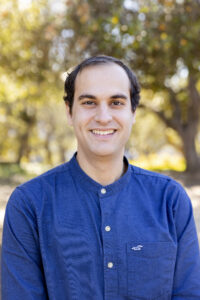
Savvas Marcou
Berkeley Seismological Laboratory
“Exploring the Utility of Earthquake Spectra Collected From Smartphones for Ground-motion Modeling”

M. Morow Tan
University of Colorado Boulder
“Towards an InSAR Catalog of Creep Events on the Imperial Fault”
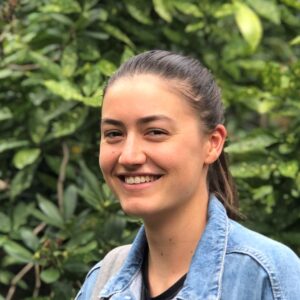
Simone Probst
ETH Zurich
“Studying the Coupling of Unburied Distributed Acoustic Sensing (DAS) for Lunar Seismology”

Cherilyn Toro Acosta
University of Puerto Rico, Mayagüez
“High and Low Noise Models for Geophone Deployments: Toward Global Monitoring Capabilities”

Ayako Tsuchiyama
Massachusetts Institute of Technology
“Intermediate-depth Earthquakes Driven by Migrating Strain Localization in the Bucaramanga Earthquake Nest”

Jeena Yun
Scripps Institution of Oceanography, UCSD
“How Did the 2016 Mw 7.8 Kaikōura Earthquake Affect the Megathrust Earthquake Potential in the Hikurangi Subduction Zone?”

Maia Zhang
Nevada Seismological Laboratory, University of Reno
“Insights Into the 2020 Monte Cristo Range Earthquake Sequence From a Near-source Aftershock Deployment”
5 June 2024 – SSA announced today the recipients of the 2024 Student Presentation Award, which honors excellent poster or oral presentations at the Annual Meeting, held in Anchorage, Alaska in April. Nominated by meeting attendees, a three-person judging panel selected the 19 award recipients among the eligible pool of student presenters.
2024 Recipients
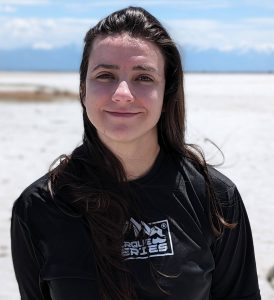 Alysha Armstrong
University of Utah
“Feature-based Magnitude Estimates for Small, Nearby Earthquakes in the Yellowstone Volcanic Region”
 Katherine Biegel
University of Calgary
“Double-Pair Double-Difference Relocation for Dense Network Improves Depth Precision of Induced Seismicity, Leading to a Detailed 3D Fault Geometry Model”

Derrick Chambers
Colorado School of Mines
“Dascore: A Python Library for Distributed Acoustic Sensing”
 Kristen Chiama
Harvard University
“Insights From Distinct Element Method Models on Fault Scarp Morphology in Thrust and Reverse Fault Earthquakes”

Nicolas DeSalvio
University of California, San Diego
“Is Dynamically Triggered Seismicity Comparable to Background Seismicity?”
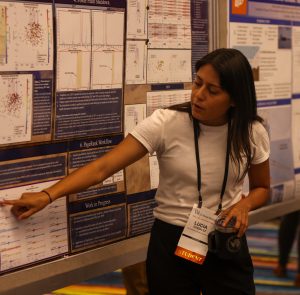 Lucia Gonzalez
University of Texas El Paso
“Machine Learning for Icequake Detection and Location Across the Eastern Shear Margin of Thwaites Glacier, West Antarctica”
 Sebin John
University of Alaska Fairbanks
“Storms, Sea Ice, and Microseismic Noise in Alaska”
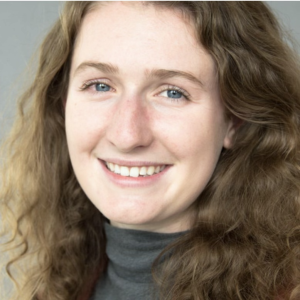 Zoe Krauss
University of Washington
“Searching for Low-Amplitude Shallow Tectonic Tremor in Cascadia Using Buried Ocean Bottom Seismometers”
 Ariane Lanteri
ETH Zürich
“Bayesian Surface Wave Inversion in Glacial Environments”
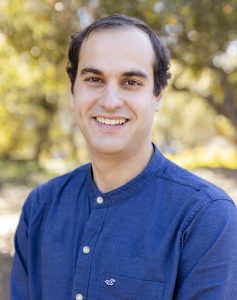 Savvas Marcou
University of California, Berkeley
“How Can Shaking Observations From the MyShake Smartphone Platform Inform Free-Field Ground Motion Residual Estimates?”
Amanda McPherson
University of Alaska Fairbanks
“Validating Tomographic Models of Alaska Using 3D Wavefield Simulations”
 Lucas Sawade
Princeton University
“Iterative Global 3D Centroid Moment Tensor Inversions Using Stored Global Green Functions From Glad-M25”
 Kathryn Scholz
University of Oregon
“Using Deep Long-Period Earthquake to Constrain Magmatic Volatile Transport at Mauna Kea”
 Min-Seong Seo
Seoul National University
“Rupture Directivity of Small Earthquakes in Southern Korean Peninsula”
 Israporn Sethanant
University of Victoria
“High impact Earthquakes on Hidden, secondary Faults Within the sparsely instrumented Golden Triangle Region of Laos, Thailand, and Myanmar”
 Shikha Sharma
Indian Institute of Technology Gandhinagar
“Developing a Hybrid Ground-Motion Modeling Framework for the Himalayan Region of India”
 Krystyna Smolinkski
ETH Zürich
“Determining the Feasibility of DAS for Urban Earthquake Monitoring in Athens, Greece”
 Wilnelly Ventura-Valentin
University of Miami
“Automated Detection and Characterization of Swarms and Mainshock-Aftershock Sequences in Southern Mexico”
 Yijian Zhou
University of California, Riverside
“Long-Term Seismicity of the East Anatolian Fault System and Its Relationship With the 2023 Mw 7.8 & 7.6 Kahramanmaraş (Se Türkiye) Earthquake Doublet”
14 June 2023 – SSA announced today the recipients of the 2023 Student Presentation Award, which honors excellent poster or oral presentations at the Annual Meeting, held in San Juan, Puerto Rico in April. Nominated by meeting attendees, a three-person judging panel selected the 13 award recipients among the eligible pool of student presenters.
2023 Recipients
 Sharmila Appini
University of Houston
“Influence of a Dipping Anisotropic Slab on Shear Wave Splitting in Japan”
 Pablo Aravena
St. Louis University
“Source Parameter Analysis Indicates Both Hydrous Phase Breakdown and Thermal Shear Runaway Drive Unusual Subduction Seismicity in Central Colombia”

Christine Assadollahi
University of Memphis
“An Equivalent Point-Source Stochastic Simulation of the NGA-East Ground-Motion Models”
 James Atterholt
California Institute of Technology
“High-Resolution Fault Zone Imaging With Distributed Acoustic Sensing”
 David Bruce
Virginia Tech
“Variability in Diatom-Based Coseismic Subsidence Estimates Over Multiple Earthquake Cycles in a Southern Oregon Tidal Wetland, Cascadia Subduction Zone”
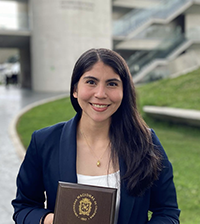 Sofia Cubillos
Universidad Nacional de Colombia
“Imaging of Tectonic Tremor Activity Along the NW Caribbean Coast and its Implication with Subduction Processes: A Study Case with Colombia-Venezuela CARMA Seismological Network”
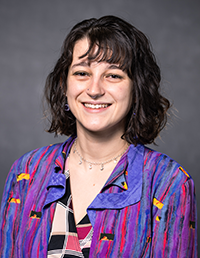 Anna Ledeczi
University of Washington
“Analyzing Recent Splay Fault Activity in the Cascadia Accretionary Wedge Using High-Resolution Seismic Reflection Data”
 Sarah Noel
University of Alaska Fairbanks
“Evaluation of Machine Learning Assisted Earthquake Phase Detection Performance in Different Tectonic Regions and Environmental Noise on the Alaska Seismic Network”
 Sarina C. Patel
University of California, Berkeley
“Uses of the Myshake App in Earthquake Early Warning and Rapid Response”
 Vanille A. Ritz
Swiss Seismological Service, ETH Zurich
“Transient Evolution of the Relative Size Distribution of Earthquakes as a Risk Indicator for Induced Seismicity”
Alba M. Rodriguez Padilla 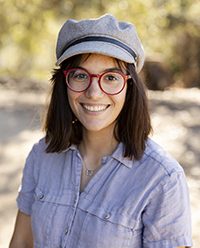
University of California, Davis
“The Coseismic and Long-Term Roles of Earthquake Gates in Strike-Slip Faults”
 Julia Rosenblit
Southern Methodist University
“Investigating Complex Triggering in the Midland Basin, Texas, Using Converted Phases”
 Roey Shimony
University of Oregon
“Constraining Basin Structure and Characterizing Ground-Motions in the Oregon Willamette Valley”
7 June 2022 – SSA announced today the recipients of the 2022 Student Presentation Award, which honors excellent poster or oral presentations at the Annual Meeting, held in Bellevue, Washington in April. Nominated by meeting attendees, a three-person judging panel selected the 18 award recipients among the eligible pool of student presenters.
2022 Recipients

Lucia Andreuttiova
University College London
“Quantifying Near-field Ground Displacements in Historical Normal Earthquakes Using Optical Image Correlation”

Reza Boushehri
University of Nevada, Reno
“Evaluation of Modified Simplified Equations for Estimating Kinematic Soil-structure Interaction Effects in Buildings With Large Footprints and Embedment Depths: A Finite Element Approach”

Robbie Churchill
University of Bristol
“Does Abundant Afterslip Mean Productive Aftershock Sequences?”

Andrew Dunning
Portland State University
“Strawberry Mountains Slip Rates in Suspiciously Seismically Still Eastern Oregon”

Sarah El Kadri
University Grenoble Alpes, CRG
“Probabilistic Seismic Hazard Assessment in Lebanon”
 David Essing
Université Grenoble Alpes, Institut des Sciences de la Terre
“What Is Driving the Different Types of Seismicity Related to the Alto-Tiberina Fault in Italy? Insights From a High-resolution Seismic Catalog”
 Jessica Ghent
University of Washington
“Hunga Tonga-Hunga Ha’apai: Spectral Characteristics of Traveling Ionospheric Disturbances From the January 2022 Eruption and Tsunami”
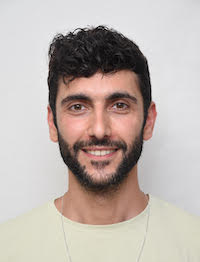 Dorian Golriz
University of California, San Diego
“Interseismic Deformation in the Dead Sea Fault Region Inferred by InSAR and GNSS Measurements”
 Keira Heilpern
Portland State University
“Systematic Quality Control of National Strong Motion Project Structure Instrumentation Using Teleseismic Data”
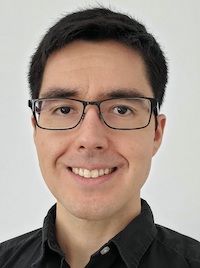 Carlos Herrera
University of Victoria
“The Mw 5.7 Pica Earthquake: A Crustal Event in Northern Chile with Large Ground Accelerations and Stress Drop”
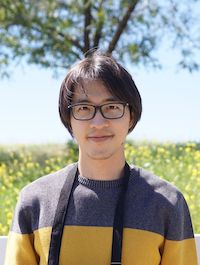 Zhe Jia
California Institute of Technology
“The 2021 South Sandwich Island Mw 8.2 Earthquake: A Slow Event Sandwiched Between Regular Ruptures”
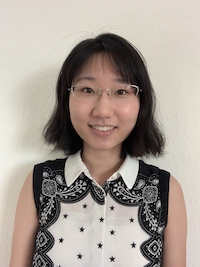 Meibai Li
The University of Texas at Austin
“Evaluation of the P-wave Seismogram Approach to Estimate Vs30 in California”
 Meredith Normand
The University of Texas at Austin
“The Variation of Kappa With Induced Shear Strain and the Accuracy of High Frequency Components of Site Response Analyses”
 Carolyn Nuyen
University of Washington
“Block Models of the Southern Cascadia Forearc Based on Geodetic Data”
 María E. Ramos-Sepúlveda
University of California, Los Angeles
“High-pass Corner Frequency Selection for Implementation in the USGS Automated Ground Motion Processing Tool”
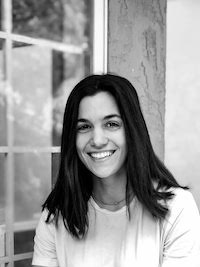 Alba Rodriguez Padilla
University of California, Davis
“738,000 Years of Off-fault Damage at the Volcanic Tablelands”
 Anna Rood
Imperial College London
“Precariously Balanced Rock Validation of Earthquake Ground-motion Models in Southern California”
 Ethan Williams
California Institute of Technology
“Continuous Seismic Monitoring of a Building Over 20 Years”
10 June 2021 – SSA announced today the recipients of the 2021 Student Presentation Award, which honors excellent poster or oral presentations Annual Meeting, which was held virtually in April. Nominated by meeting attendees, a three-person judging panel selected the 19 award recipients among the eligible pool of student presenters.
2021 Recipients
Click a presentation title below to read the abstract.

Maggie Bailey
Colorado School of Mines
“Techniques for Producing Spatially Correlated Conditional Random Realizations of Ground Motion Fields”

Jared Bryan
Massachusetts Institute of Technology
“Receiver Function Monitoring at Mount St. Helens”

Jordan Bishop
University of Alaska Fairbanks
“3D Simulations of Seismo-Acoustic Coupling Over Topography”

Kristen Chiama
Harvard University
“Geomechanical Modeling of Ground Surface Deformation Associated With Thrust and Reverse Fault Earthquakes”

Rebecca L. Colquhoun
University of Oxford
“Investigating Earthquake Nucleation: What Do Foreshocks, Aftershocks and Sequences Tell Us?”

John Dale B. Dianala
University of Oxford/University of the Philippines, Diliman
“The Relationship Between Seismic and Aseismic Slip on the Creeping Segment of the Philippine Fault: Insight to Earthquake Recurrence and Fault Mechanics”

Mohamad M. Hallal
The University of Texas at Austin
“An H/V Geostatistical Approach for Developing Pseudo-3D Vs Models to Account for Spatial Variability in Site Response”

Vivien He
Palos Verdes Peninsula High School
“A Consumer Internet-of-Things Device for On-Site and Regional Earthquake Early Warning”

Stacy Larochelle
California Institute of Technology
“Constraining the Stability of a Rate-and-State Fault Subjected to Fluid Injection”

Meichen Liu
University of Michigan, Ann Arbor
“Characterizing Multi-Subevent Earthquakes Using the Brune Source Model”

Leila Mizrahi
ETH Zurich
“Embracing Data Incompleteness for Better Earthquake Forecasting”

Alba M. Rodríguez Padilla
University of California, Davis
“Beyond the Damage Zone: Characterizing Widespread Inelastic Deformation From Integrated Fracture, Aftershock and Strain Maps of the 2019 Ridgecrest Sequence”

Nico Schliwa
Ludwig Maximilian University of Munich
“Near-Field Corner Frequency Analysis of Data-Integrated Large-Scale Dynamic Rupture Simulations of the 2019 Ridgecrest and the 1992 Landers Earthquakes”

Max Schneider
University of Washington
“Effective Uncertainty Visualization for Aftershock Forecast Maps”

Israporn (Grace) Sethanant
University of Victoria
“Complex Rupture and Source Model of the 15 May 2020 Mw 6.5 Monte Cristo Range Earthquake From Insar and Earthquake Relocation”

Brandon Shuck
The University of Texas at Austin Institute for Geophysics
“Strike-Slip Enables Subduction Initiation Beneath a Failed Rift: New Seismic Constraints from Puysegur Margin, New Zealand”

Sandra Rosero-Rueda
University of Puerto Rico Mayaguez
“Local Magnitude (Ml) Calibration for the Puerto Rico Seismic Network”

Tianwei Sun
University of Science and Technology of China
“Imaging the Crustal Structure Beneath the Northwest Yunnan From a High‐Density Seismic Array”

Valeria Villa
California Institute of Technology
“Mapping the 3D Structure of the San Gabriel and San Bernardino Basins, Greater Los Angeles Area From Seismic and Gravity Measurements”
2020 Recipients
The Student Presentation Awards were not awarded in 2020, as the SSA Annual Meeting was cancelled due to COVID-19.
2019 Recipients
The 2019 Student Presentation Awards were given based on evaluation by the Student Award subcommittee, considering the nominations submitted at the meeting co-chaired by Michael Bostock and Joan Gomberg. From among the student presentations evaluated at the 2019 SSA Annual Meeting in Seattle, Washington, the subcommittee selected the following eighteen for recognition. Click a presentation title below to read the abstract.

Kyren Rix Bogolub
Colorado Geological Survey / University of Colorado Boulder
Increasing Colorado’s Seismic Network – New Developments by the Colorado Geological Survey
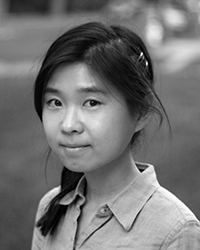
Shanna Chu
Stanford University
Source Variations in Intraslab Earthquakes From Data and Modelling

Colin Chupik
University of Nevada, Reno
Quaternary Geologic Mapping and Paleoseismic Assessment of the Warm Springs Valley Fault, Washoe County, Nevada

Jonathan Griffin
University of Otago/Geoscience Australia
Towards Time-Dependent Modelling of Episodic Earthquake Occurrence on Intraplate Faults

Hyejin Lee
Ulsan National Institute of Science and Technology
Differences Between Main-Shock and Aftershock Ground Motions Using the Japan’s Kik-Net Database
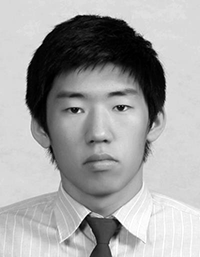
Junyoung Lee
Ulsan National Institute of Science and Technology
Characteristics of Ground Motions Generated by the 2017 M5.4 Pohang, South Korea Earthquake

Simone Mancini
University of Bristol / British Geological Survey, UK
Improving Physics-Based Earthquake Forecasts for the 2016-2017 Central Italy Earthquake Sequence
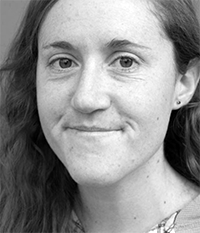
Ginevra Moore
University of Washington
Shallow Offshore Deformation in the Seattle Fault Zone: Insights From High Resolution Seismic Reflection Imagery

Emma Myers
University of Washington
Investigating Anomalous Crustal Thickness of the Subducting Iquique Ridge
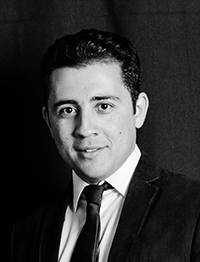
Nima Nazemi
The University of Memphis
Developing Data-Driven Stochastic Seismological Parameters of CENA from the NGA-East Database

James Neely
Northwestern University
Uncertainties in Stress Drop Estimates and Their Tectonic Consequences

Carolyn Nuyen
University of Washington
Crustal Deformation Near the Mendocino Triple Junction Inferred From GPS-Derived Strain Rate Maps
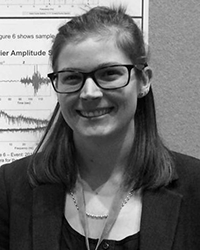
Samantha M. Palmer
University of Western Ontario
Comparing Eastern and Western Canada Kappa Values

Alexandre Plourde
The University of British Columbia
Relative Moment Tensors Revisited

Zach Rosson
Oklahoma Geological Survey; University of Oklahoma
Aftershock Decay in Space and Time in Regions with Induced Seismicity in Oklahoma

Elena Savidge
University of Victoria
A Remote Sensing Study of the December 2017 Hojedk (Iran) Earthquake Triplet: Sequential Rupture of Conjugate Reverse Faults in a Strike-Slip Restraining Bend

Ian Stone
University of Washington
Topographic Response to Ground Motion From Modeled Seattle Fault Earthquakes
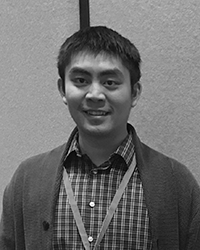
Yang Yang
Center for Earthquake Research and Information, University of Memphis
Ambient Noise Empirical Green’s Function Full Waveform Tomography for the Northern Mississippi Embayment
2018 Recipients
The Student Presentation Awards recognize excellence in student poster and oral presentations at the Annual Meeting. The award is given to up to 10% of the students presenting at the Annual Meeting whose presentations meet absolute criteria that cover the quality of both content and presentation. The 2018 Student Presentation Awards were given based on evaluation by the Student Award subcommittee, considering the nominations for the award submitted at the meeting, co-chaired by Meghan S. Miller and Sergio Barrientos. From among the student presentations evaluated at the 2018 SSA Annual Meeting in Miami, Florida, the subcommittee selected the following ten for recognition. Click abstract title to read the presentation abstract. Where available, links are also provided to posters and slidecasts of the presentations (SSA username & password required to view posters and slidecasts).

Paul Geimer
University of Utah
Spectral Monitoring of Rock Arches
Geimer, P. R.; Moore, J. R.

Tiegan Hobbs
Georgia Institute of Technology
Hobbs, T. E.; Newman, A. V.; Protti, J. M.

Doyeon Kim
Cornell University
Kim, D.; Keranen, K. M.; Abers, G. A.; Brown, L. D.

Qingkai Kong
Berkeley Seismology Laboratory
Kong, Q.; Inbal, A.; Allen, R. M.

Anne Lamontagne
University of California, Santa Barbara
Lamontagne, A. M.; Tanimoto, T.; Anderson, A.

Emily Morton
New Mexico Tech
Morton, E. A.; Bilek, S. L.; Rowe, C. A.
 Karen Pearson
University of Maryland
Pearson, K. M.; Thomas, A. M.; Lekic, V.

Mauricio Reyes Canales
University of Alberta, Canada
Reyes Canales; Van Der Baan, M.

Vianca Emir Severino Rivas
University of Puerto Rico, Mayagüez Campus
Severino, V. E.; Maldonado, J.; Ruiz, R.; Vanacore, E. A.; Gonzalez, W.

Yongfei Wang
University of California, San Diego/San Diego State University
Complex Source Spectra in Small Earthquakes Caused by Multiple Asperities
Wang, Y.; Day, S. M.
2017 Recipients
The Student Presentation Awards recognize excellence in student poster and oral presentations at the Annual Meeting. The award is given to up to 10% of the students presenting at the Annual Meeting whose presentations meet absolute criteria that cover the quality of both content and presentation. The 2017 Student Presentation Awards were given based on evaluation by the Student Award subcommittee, considering the nominations for the award submitted at the meeting, co-chaired by Whitney Trainor-Guitton (Colorado School of Mines) and Richard Aster (Colorado State University). From among the students presentations evaluated at the 2017 SSA Annual Meeting in Denver, Colorado, he subcommittee selected the following 20 for recognition. Click abstract title to read the presentation abstract. Where available, links are also provided to posters and slidecasts of the presentations (SSA username & password required to view posters and slidecasts).
 Niloufar Abolfathian
University of Southern California
Spatio-Temporal Variations of Stress Parameters in the San Jacinto Fault Zone
 Karianne Bergen
Stanford University
 David Castro Cruz
Cerema, Géoazur
Seismic Non-Linear Behavoir of Soil Inferred by the Analysis of the Kik-Net Borehole Data [ View Slidecast ]
 Phoebe DeVries
Harvard University
 Manuel Florez
Massachusetts Institute of Technology
Constraining Earthquakes Source Properties Using Depth Phases [ View Poster ]
 Alex Grant
University of Washington
The Impact of Rockfalls on Dwellings During the 2011 Christchurch, New Zealand Earthquakes
 Christie Hale
University of California, Berkeley
PEER PSHA Code Verification Project [ View Slidecast ]
 Lisa Linville
University of Utah
Identifying New Earthquake Templates Adds Valuable Information to Induced Seismicity Sequences
 Molly Luginbuhl
University of California, Davis
Are Large Global Earthquakes Temporally Clustered? [ View Slidecast ]
 Avinash Nayak
University of California, Berkeley
Diverse Seismic Signals Associated with the Sinkhole at Napoleonville Salt Dome, Louisiana
 Sunyoung Park
Harvard University
A New Approach to Constrain Near-Surface Seismic Structure Based Upon Body-Wave Polarization
 Grace Parker
University of California, Los Angeles
Recommended Central and Eastern North America Seismic Site Amplification Models for USGS Map Applications [ View Slidecast ]
 Leah Salditch
Northwestern University
Modeling Earthquake Clusters as Resulting From Long-Term Fault Memory [ View Slidecast ]
 Gregor Schweppe
Cologne University
 Yumeng Tao
University of Texas at Austin
Insights into Small-Strain Damping from Borehole Array Recordings [ View Slidecast ]
 Daniel Trugman
University of California, San Diego
Examining Earthquake Source Properties and Scaling of Recent Seismicity in Southern Kansas
 Ekaterina Tymofyeyeva
University of California, San Diego
Geodetic Evidence for a Blind Segment of the San Jacinto Fault [ View Poster ]
 Jagdish Chandra Vyas
King Abdullah University of Science and Technology
Mach Wave Coherence in the Presence of Source and Medium Heterogeneity [ View Slidecast ]
 Yongfei Wang
University of California, San Diego; San Diego State University
Pulse-Like Property and Complex Fault Geometry on Dynamic Rupture Models of the 2015 Mw7.8 Nepal Earthquake [ View Slidecast ]
 Qimin Wu
Virginia Tech
Stress Drop and Source Scaling of Recent Earthquake Sequences in the Central and Eastern United States [ View Slidecast ]