
23 February 2026—Water leakage during the construction of a hydropower tunnel in northern Norway may have been the trigger for a nearby earthquake swarm that occurred three years later, according to a new analysis published in The Seismic Record.
The swarm at Sørfjorden began in June 2023 and continued in bursts of seismic activity for almost a year. At its peak the swarm contained nearly 300 earthquake events per day, with the largest at magnitude 2.1.
“Since 2025, the area has returned to its background seismicity level, and it is likely that the swarm is finished,” said Angélique Marck, a former research assistant at the University of Bergen, now a Ph.D. student at GFZ German Research Centre for Geosciences.
The first signs that the swarm might be related to the SmiSto hydropower project came from satellite observations of the area, showing that the ground over the project’s tunnels sank after construction.
The ground subsidence was likely to due to significant water leakage that occurred during construction, according to the TSR authors.
“The swarm occurred in a location where there were no previous records of such activity and would have been interesting in itself,” said Marck. “But being aware of the ground deformation, we started to investigate whether there could be a physical connection between the water leakage during tunnel construction and the earthquake swarm.”
Marck and colleagues built a catalog of the swarm’s earthquakes, analyzing the location and timing of those events to learn more about their potential origin. They conclude that the swarm’s activity can possibly be explained by changes in rock pore pressure and stress in the fractured rock near the tunnel.
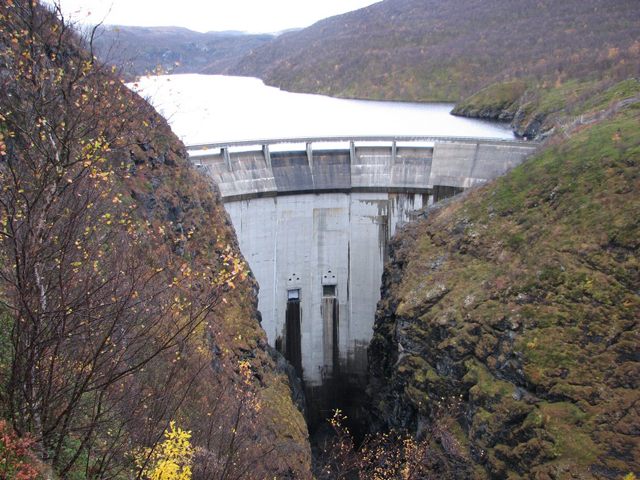
The volume of leaked water may have provided those changes in stress and pressure through a mechanism called fault valving, Marck said. Fault valving normally occurs when a reservoir of fluid becomes over-pressurized compared to the pressures in a nearby volume of fractured rock.
“When the pressure difference becomes large enough, a threshold is reached and fluids can enter the fault zone. This increases fluid pressure inside the fault, weakens it, and can produce the earthquake,” Marck explained.
“In our case, we argue that the change in pressure difference between the fracture zone where the swarm occurred and the surrounding bedrock was important for triggering,” she added.
Three years is a long time between the tunnel leaks and the earthquake swarm, but the researchers say water travels slowly through cracks and pores in the rock, taking time to build up the pressure changes needed to affect a fault.
Marck and her colleagues said they were aware of only one other case, in China, linking tunnel leakage and earthquakes, “indicating that this type of earthquake triggering may only happen under very specific circumstances.”
“However, one may consider this as a potential problem when constructing future road or hydropower tunnels in this region of Norway,” Marck said. “In our specific area, earthquakes were small and not presenting a serious hazard.”
Hydropower contributes about 90% of the total production of electricity in Norway, through more than 1700 hydropower plants and more than 4000 kilometers of waterway tunnels, the researchers noted in their paper.