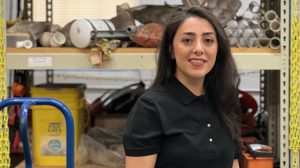
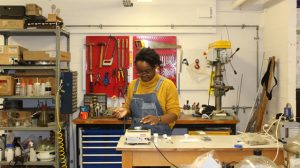
29 July 2022–Zoya Farajpour was born in Iran, one of the most seismically active countries in the world. Most of Iran’s major cities and towns are in the vicinity of seismic faults, she said. “The oral and written history of this country is full of massive and destructive earthquake events … Continue Reading »
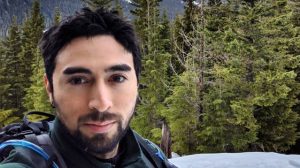
29 June 2022–The scenes of devastation from the 2011 Tohoku earthquake and tsunami were part of what made Manuel Mendoza consider a career as a geophysicist, he says. The combination of interesting science, travel and the ability to help people were all factors that convinced him to study earthquakes. Mendoza’s … Continue Reading »
At its 20 November 2021 meeting, the SSA Board of Directors established the Diversity, Equity and Inclusion (DEI) Committee, a standing committee of the SSA Board of Directors. Preamble SSA recognizes the need to have broader representation and participation from all sectors of society, both in its leadership and its … Continue Reading »
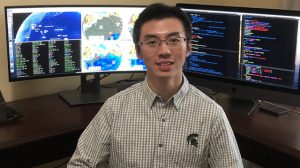
20 September 2021–Growing up in the mountains in China, Songqiao “Shawn” Wei never saw the ocean until he was 23, flying over the Pacific from Beijing to San Francisco for an American Geophysical Union meeting. “But when I was a kid I liked the sea, from books and movies, and … Continue Reading »
16 August 2021–Earthquakes are happening all the time inside Louisa Brotherson’s lab. Tiny ones, at least—and the strike-slip faults involved occur in Perspex plastic, not rock. Using a machine called a triaxial deformation apparatus, Brotherson can apply different pressures and stresses on the plastic to mimic the conditions that lead … Continue Reading »
15 July 2021–For Amir Salaree, the road to studying tsunamis began when he was a physics major at the University of Tehran, “looking for simple, real-world applications of all the beautiful math and physics that I was learning which would be useful to people,” he recalled. Visiting a friend in … Continue Reading »