16 April 2026—The first qualitative study in the United States examining the experience of deaf, deafblind and hard of hearing individuals (DHH+) with earthquake early warning (EEW) highlights accessibility gaps in disaster alert systems.
At the 2026 SSA Annual Meeting, a team of researchers led by Michele Cooke at the University of Massachusetts Amherst discussed their conversations with eight deaf, deafblind or hard of hearing university students, who shared their experiences with past earthquakes, access to early warning alerts and their perceptions of ShakeAlertⓇ, an EEW system for detecting earthquakes and alerting residents of California, Oregon, and Washington.
The study found key accessibility gaps within four areas: lack of messaging in participants’ languages, including American Sign Language, unclear alert messaging, inaccessible message delivery for deafblind persons, and insufficient access to earthquake information and training.
“Weaknesses identified in these four themes reduces the trust of DHH+ in EEW systems and compromises the capacity of alert recipients either to take swift protective action or to mentally prepare before shaking starts,” the team concluded.
Cooke and colleagues recommend engaging DHH+ individuals at the start of designing earthquake early warning systems “as foundational elements of disaster preparedness and response.”
The study team included a mix of deaf, hard of hearing, late-hard of hearing and hearing researchers.
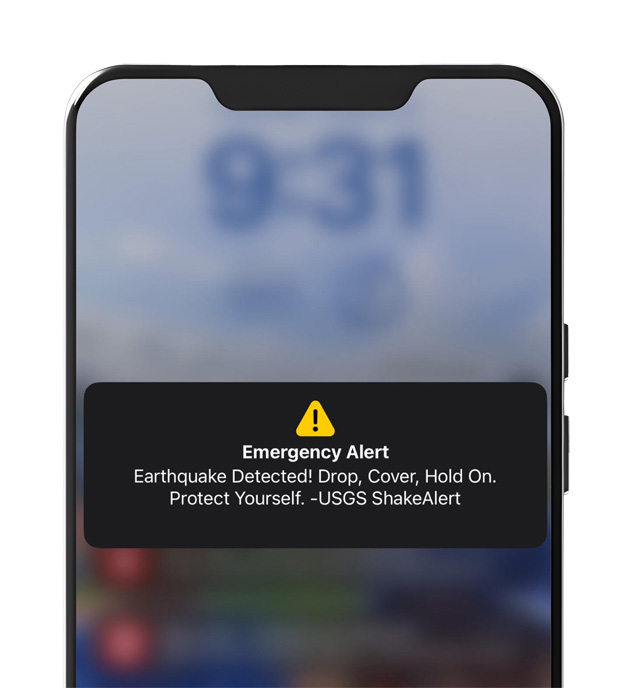
Their study presented at the SSA meeting focused on individual responses to mobile phone alert messages, the most common way individuals receive earthquake early warnings.
On the U.S. West Coast, these messages are typically issued as a Wireless Emergency Alert (WEA) from the Federal Emergency Management Agency (FEMA), a message from ShakeAlert’s technical partners such as a school or hospital, through user-installed apps such as MyShake, or from a separate earthquake warning system on Google Android phones. The messages can be visual or audio or both, depending on the issuer.
According to the Center for Disease Control’s 2019 National Health Interview Survey (NHIS) about 13% or 42.6 million persons in the United States have hearing difficulty.