
17 April 2026—A seismic hush fell over U.S. and Canadian cities that were in the “path of totality” during the 8 April 2024 total solar eclipse, according to new research presented at the 2026 SSA Annual Meeting.
Johns Hopkins University seismologist and planetary scientist Benjamin Fernando was in an Ohio city when the eclipse occurred “and I noticed that all of a sudden everything went really quiet,” he recalled. “So I was curious as to whether that was going to be replicated in the seismic data.”
Seismic noise caused by human activity can come from construction and mining activity, crowded concerts or sporting events and the traffic of the daily commute—any activity we produce that causes the ground to shake.
After analyzing seismic noise levels across April 2024 from several hundred seismic stations, Fernando found a clear pattern of urban seismic quiet on the darkened day. First, noise levels peaked slightly before the start of totality began in a city. Noise levels then faded significantly as the sun was completely obscured by the moon. Finally, noise rose again to slightly higher than average levels for the month.
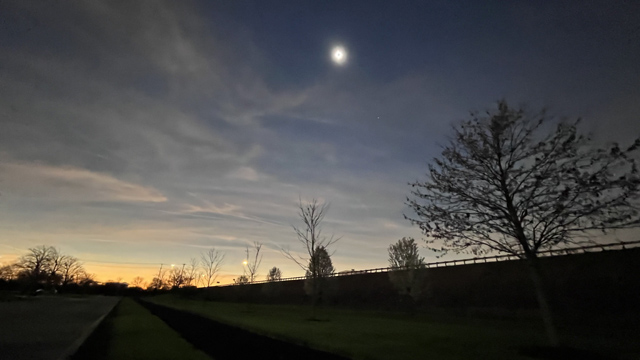
The pattern was only visible in cities, not rural areas, that were directly in the path of totality. The data did not record a hush in cities that were even slightly out of the path of totality, Fernando said. “For example, in New York it was 97% totality, but nothing changed.”
The findings suggest that cities in the path of totality experienced the eclipse as a cultural event that was significant enough to disrupt the rhythms of normal life and were also places with enough ground-shaking daily activity to be noticeable when it faded away.
Covid-19 lockdowns in 2020 created one of the most famous cases of global seismic quiet related to human inactivity, dropping anthropogenic seismic noise by 50% between March and May of that year.
The new study could also help dispel the myth that the alignment of the sun, moon and Earth during an eclipse increases seismic activity, Fernando suggested.
“Folks for whatever reason sometimes push the narrative that eclipses cause earthquakes,” he said. “That’s definitely not the case, and this is another demonstration of that.”